Banc d'Arguin National Park

Mauritania · UNESCO World Heritage · Wildlife Expedition

Banc
d'Arguin

Sail through a UNESCO World Heritage site where millions of migratory birds gather, Imraguen fishermen work with dolphins, and the Sahara dissolves into the Atlantic.

Learn More
Scroll
12,000
km² Protected
1989
UNESCO Listed
2M+
Migratory Birds
5 Days
Duration
180+
Bird Species
Banc d'Arguin coast
Banc d'Arguin wildlife
UNESCO 1989

A Living Sanctuary

Where the desert
meets the ocean

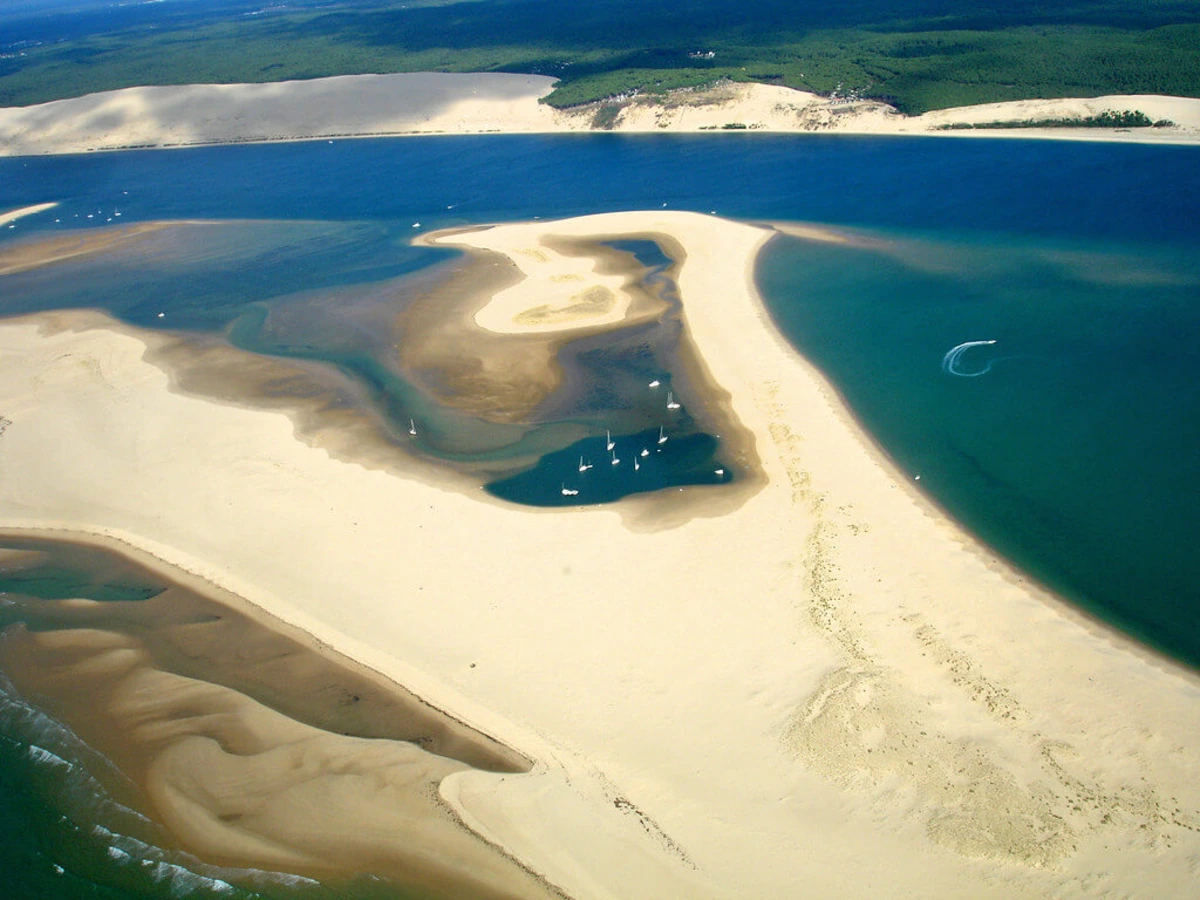
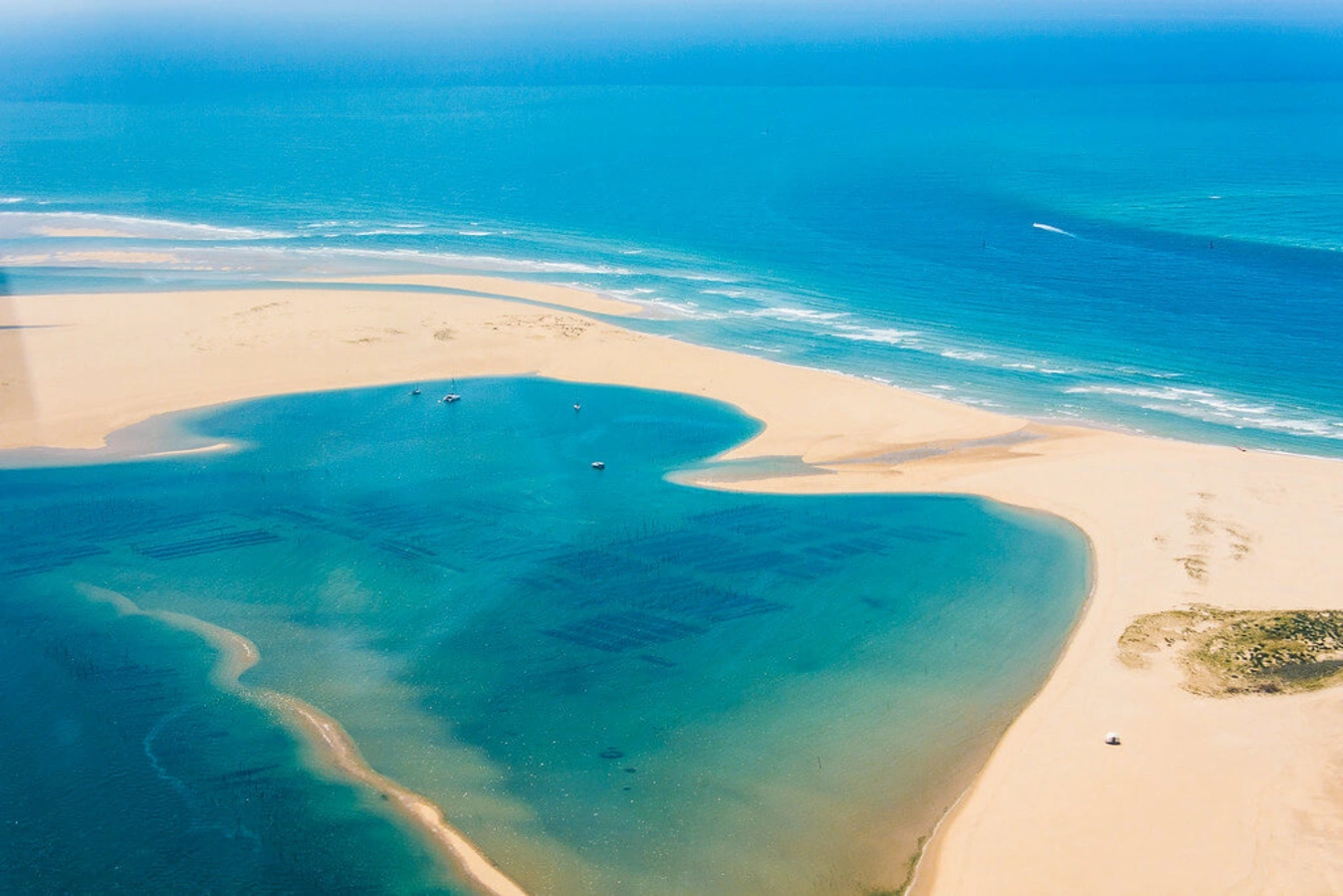
The Banc d'Arguin National Park is one of the most important bird sanctuaries in the world and Mauritania's greatest natural treasure. Spanning 12,000 square kilometres of coastline, shallow waters, mudflats, and sand islands, it sits at the exact point where the Sahara Desert transitions into the Atlantic Ocean — creating one of the richest marine ecosystems on the planet.

Inscribed as a UNESCO World Heritage Site in 1989, the park hosts over two million migratory birds each winter, arriving from breeding grounds across Europe and Siberia. Flamingos, pelicans, spoonbills, cormorants, whimbrels, and terns congregate in numbers so vast they darken the sky. The shallow, nutrient-rich waters — fed by the upwelling Canary Current — support one of the most productive marine food chains in the Atlantic.

But Banc d'Arguin is not just a bird reserve. It is home to the Imraguen, one of Mauritania's most remarkable communities — fishermen who have lived on these shores for centuries and developed a unique relationship with bottlenose dolphins, who help drive mullet into their nets in one of nature's most extraordinary partnerships.
🌎

UNESCO World Heritage Site — Since 1989

Banc d'Arguin was inscribed on the UNESCO World Heritage List for its outstanding universal value as a meeting point of the Sahara and the Atlantic, hosting the largest concentration of wintering waders in the world. The park protects a unique landscape of sand dunes, coastal swamps, small islands, and shallow coastal waters — a transition zone between desert and ocean found nowhere else on Earth at this scale.

The Experience

A living
sanctuary

🦅
Millions of Birds

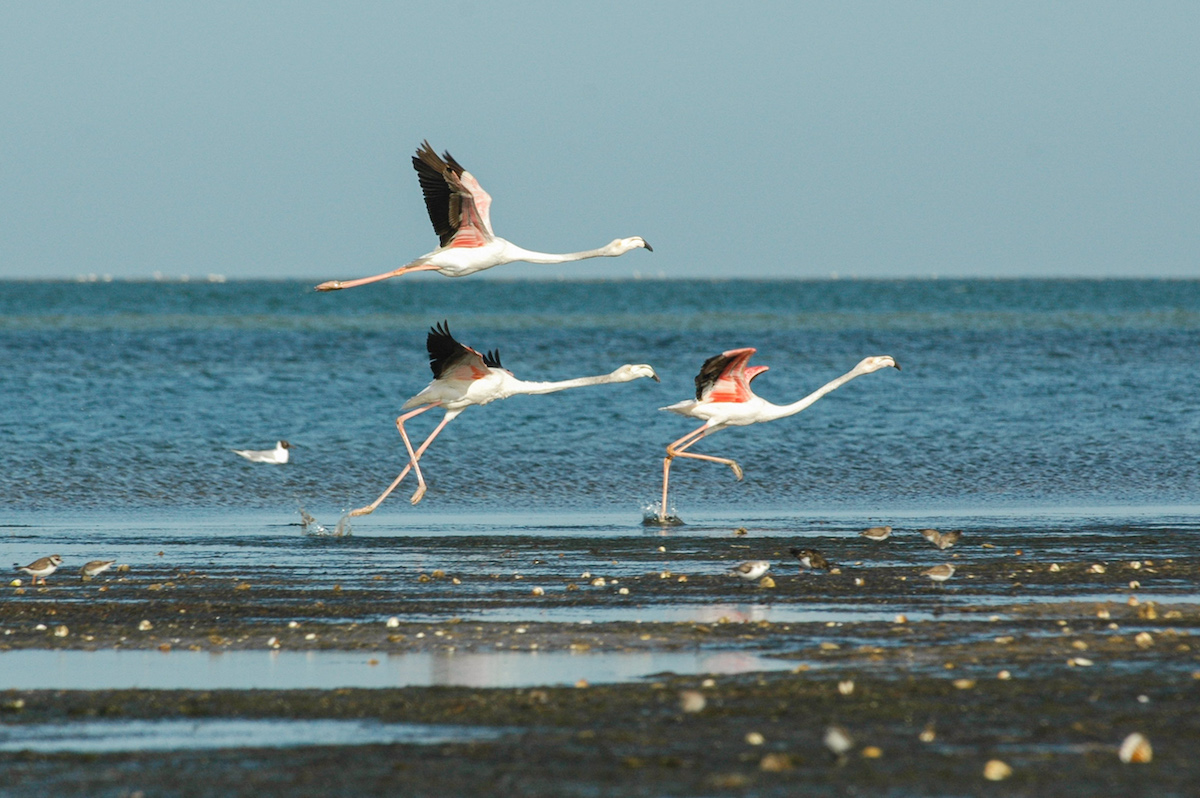
During the winter migration season (November to April), Banc d'Arguin hosts over two million birds from more than 180 species. Vast flocks of flamingos wade through shallow lagoons, white pelicans fish in formation, and thousands of waders probe the mudflats. The spectacle is one of the greatest wildlife events on the African continent.

Migration season
🐬
Dolphins & Imraguen

The Imraguen fishermen have cooperated with bottlenose dolphins for generations. When mullet schools approach, the fishermen slap the water with sticks, and dolphins drive the fish into their nets — a mutualistic relationship that benefits both species. Witnessing this ancient practice is one of the park's most extraordinary moments.

Living tradition
Traditional Sailing

Explore the park's islands and shallow waters aboard a traditional Imraguen sailing boat — a wooden pirogue with a simple lateen sail. Gliding silently across the turquoise shallows, passing sand islands thick with nesting birds, is a profoundly peaceful experience. Your Imraguen guide knows every channel and every sandbar.

Boat excursion
🐋
Monk Seals

The Mediterranean monk seal, one of the world's most endangered marine mammals, has a small surviving colony near Banc d'Arguin. While sightings are rare and the seals are highly protected, the park's pristine coastline is one of the few places where this extraordinary animal still exists in the wild.

Rare wildlife
🔀
Cap Iwik

At Cap Iwik, a remote headland within the park, a massive whale skeleton rests on the sand — bleached white by the sun and salt. The bones have been there for decades, becoming both a natural monument and a navigational landmark for the Imraguen. The eerie beauty of this site, set against the empty coastline, is unforgettable.

Landmark
🌝
Desert Nights

Camp on the edge of the park where the dunes meet the sea. At night, with no light pollution for hundreds of kilometres, the Milky Way is reflected in the still waters of the lagoons. The silence is total, broken only by the distant calls of night-feeding birds. It is one of the most peaceful places on Earth.

Camping
Banc d'Arguin wildlife sanctuary

The Imraguen

Fishermen who work
with dolphins

The Imraguen are one of the smallest and most remarkable ethnic groups in Mauritania. For centuries, they have lived on the shores of Banc d'Arguin, fishing with hand-woven nets and sailing boats powered only by the wind. Their most extraordinary tradition is their partnership with bottlenose dolphins: when the mullet run, Imraguen fishermen wade into the shallows and beat the water with sticks, signalling to nearby dolphins. The dolphins respond by herding the fish into a tight school and driving them directly into the waiting nets.

This is not trained behaviour — it is a mutualistic relationship that has evolved over generations, with both the fishermen and the dolphins benefiting from the catch. Marine biologists consider it one of the most remarkable examples of human-animal cooperation in the natural world. The Imraguen themselves are deeply protective of both the dolphins and the park, viewing their relationship as sacred.

“Watching the dolphins drive fish into the nets was the most extraordinary thing I have ever seen. It was like watching two species who had agreed, centuries ago, to share the sea.”
— Visitor, Banc d'Arguin 2024

Before You Go

Practical
information

Getting There
Via Nouakchott or Nouadhibou

The park is accessed by 4x4 from Nouakchott (6–8 hours via the coastal track) or from Nouadhibou (3–4 hours). Entry permits are required and Yolo arranges these in advance. The journey along the coast is itself spectacular.

What to Bring
Wildlife & Coastal Gear

Binoculars (essential for birdwatching), sunscreen, a wide-brimmed hat, light breathable clothing, warm layers for evenings, a camera with zoom lens, insect repellent, and a headlamp. Yolo provides camping gear, food, water, and boat excursions.

Duration
5 Days / 4 Nights

The full Banc d'Arguin experience requires at least 5 days to cover the park's key sites: Iwik village, Cap Iwik, the island bird colonies, and Imraguen fishing camps. Shorter 3-day trips are possible but cover less ground.

Best Time to Visit
November → March

The winter months offer the peak bird migration — millions of waders, flamingos, and pelicans are present. The weather is warm during the day (25–30°C) and cool at night. The dolphin-fishing season varies but is most active in autumn and spring.

Difficulty Level
Easy

No strenuous activity required. The experience involves 4x4 travel, short walks on beaches and sand islands, and boat excursions. Suitable for all ages and fitness levels. The main challenge is the remoteness — there are no facilities within the park.

What's Included
Full Support

All transport, park entry permits, experienced naturalist guide, Imraguen boat excursions, camping equipment, all meals and water, birdwatching briefing, and optional extension to Nouadhibou or the Mheijratt coast.

Day by Day

The Itinerary

01
Day
Nouakchott → North along the coast
Atlantic coast road · Beach lunch · Coastal camp

We leave at 8am with the Atlantic immediately to our left. This coast road is one of the most underrated drives in West Africa — completely empty, the ocean visible for most of it, the desert coming all the way down to the waterline in places. We stop to cook lunch on the beach somewhere around midday and keep driving. Camp on the coast as the light dies on the water.

02
Day
→ Nouadhibou
480km from NKC · Guesthouse · Cap Blanc · Monk seals

We arrive in Mauritania's second city by midday. Nouadhibou sits at the very tip of a long thin peninsula — Atlantic on the west, the Baie du Lévrier on the east. It is not a tourist city and that is part of the point. We check into a guesthouse, clean up properly for the first time in two days, and take the afternoon slowly. In the early evening we drive out to Cap Blanc at the peninsula's end, where monk seals sometimes pull themselves out of the water onto the rocks.

03
Day
Banc d’Arguin
UNESCO World Heritage · Traditional dhow · 1M+ migratory birds · Ocean camp

Everything has been building to this. The Banc d'Arguin National Park is one of the most important bird habitats on earth — over a million migratory shorebirds from northern Europe, Siberia, and Greenland gather here each year in a shallow coastal wetland that is essentially unknown to most travellers. No motorised boats are allowed in the park, so we go out on a traditional dhow and move quietly through the channels between sandbars while flamingos and pelicans work the water around us. Tented camp overnight by the ocean.

04
Day
Banc d’Arguin → South
South along the Atlantic · Beach lunch · Coastal camp

We leave the park and begin the long drive back down the coast. Lunch on the beach. The road is the same but the direction changes everything — now you are watching a country you have just come to know slowly returning to familiar ground. Camp somewhere along the way.

05
Day
→ Nouakchott
Home by midday

Back home by early afternoon. Five days on the Atlantic edge of the Sahara.

Minimum 2 travellers per booking.
Travelling solo? Contact us on WhatsApp to join a fixed departure date.

Ready to Explore?

Sail through a living
UNESCO sanctuary

From $749 per person (group of 4). 5-day expedition including 4x4 transport, park permits, Imraguen boat excursions, all meals, camping gear, and expert naturalist guide.

Explore Other Experiences