Mauritania · Hodh Ech Chargui · UNESCO World Heritage
Oualata
A city painted by hand, guarded by scholars, and forgotten by time — the most remote jewel in the Sahara's crown.
Scroll
Book Your Visit
We usually reply within a few hours. Your details are never shared.
Mauritania · Hodh Ech Chargui · UNESCO World Heritage
A city painted by hand, guarded by scholars, and forgotten by time — the most remote jewel in the Sahara's crown.
Ancient Caravan City
Oualata was already old when the great trans-Saharan caravans found it. Established as early as the 7th century within the orbit of the Ghana Empire, it grew through the medieval centuries into one of the most consequential cities on the continent — a hub of Islamic scholarship, long-distance trade, and political influence stretching from the Sahara to the Niger Bend.
The legendary traveller Ibn Battūta passed through in the 14th century and stayed for 55 days, struck enough by the place to record his impressions in detail. By then the city was at the height of its power, drawing scholars and merchants from across the known world.
Today Oualata holds UNESCO World Heritage status — alongside Chinguetti, Ouadane, and Tichitt — and receives fewer foreign visitors than almost any comparable site on earth. That remoteness is not a drawback. It is precisely the point.
Oualata was inscribed on the UNESCO World Heritage List in 1996 as one of four Ancient Ksour of Mauritania — testament to the extraordinary role these cities played as crossroads of trade, faith, and learning across the medieval Sahara. The designation recognises not only the architecture but the living manuscript tradition that continues within its walls today.
What to See & Do
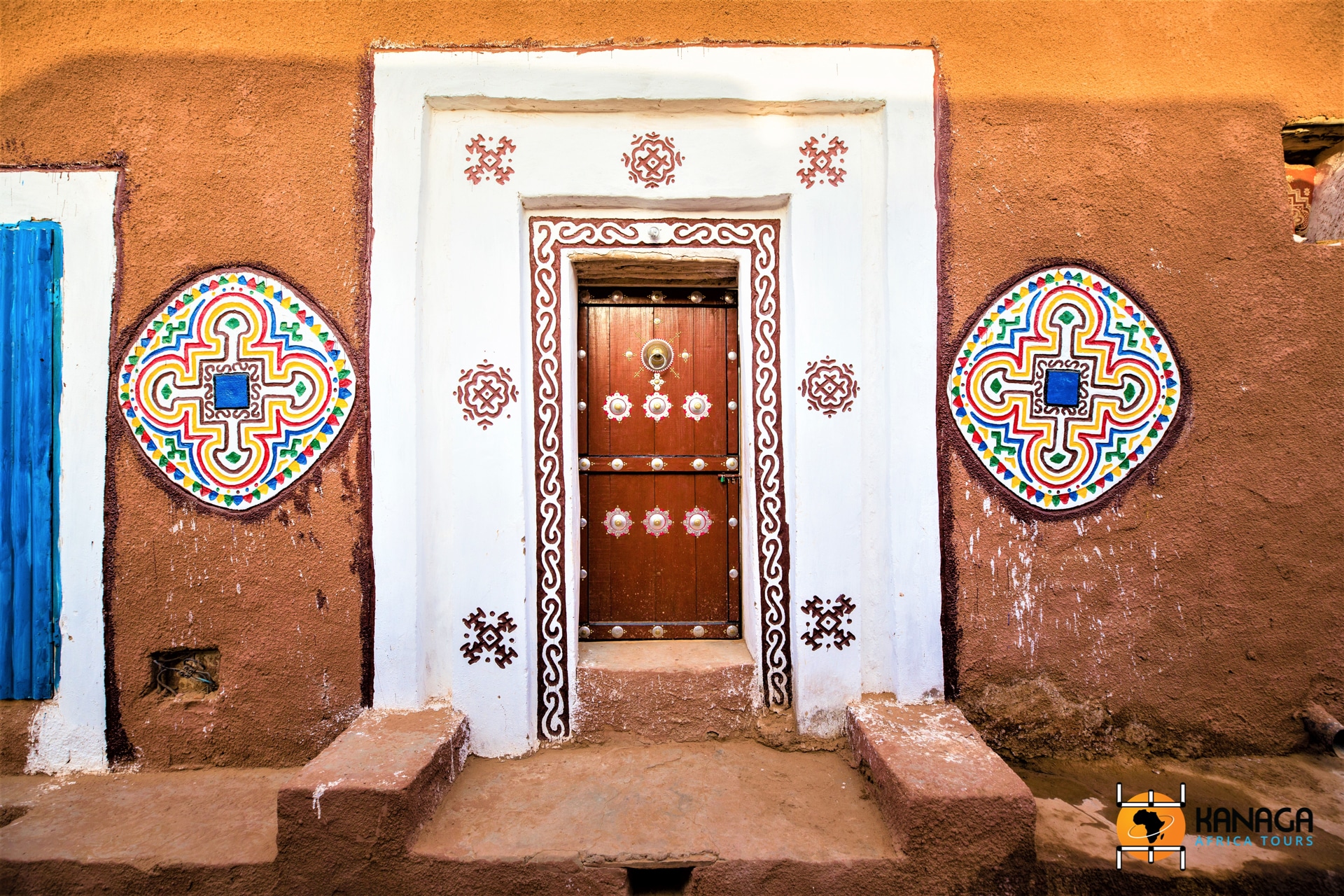
Oualata's defining marvel: the interiors and doorways of its adobe houses are covered in geometric and floral paintings applied exclusively by women, passed down through generations as both craft and cultural code. The motifs are believed to carry protective and spiritual meaning — not mere decoration but a living language written on walls.
UnmissableOualata's families have been custodians of priceless Islamic manuscripts for centuries — texts on theology, astronomy, mathematics, and law that predate most European libraries. The town's Manuscript Museum brings a selection of these extraordinary documents together in one place, offering a window into a world of scholarship most visitors never knew existed in the Sahara.
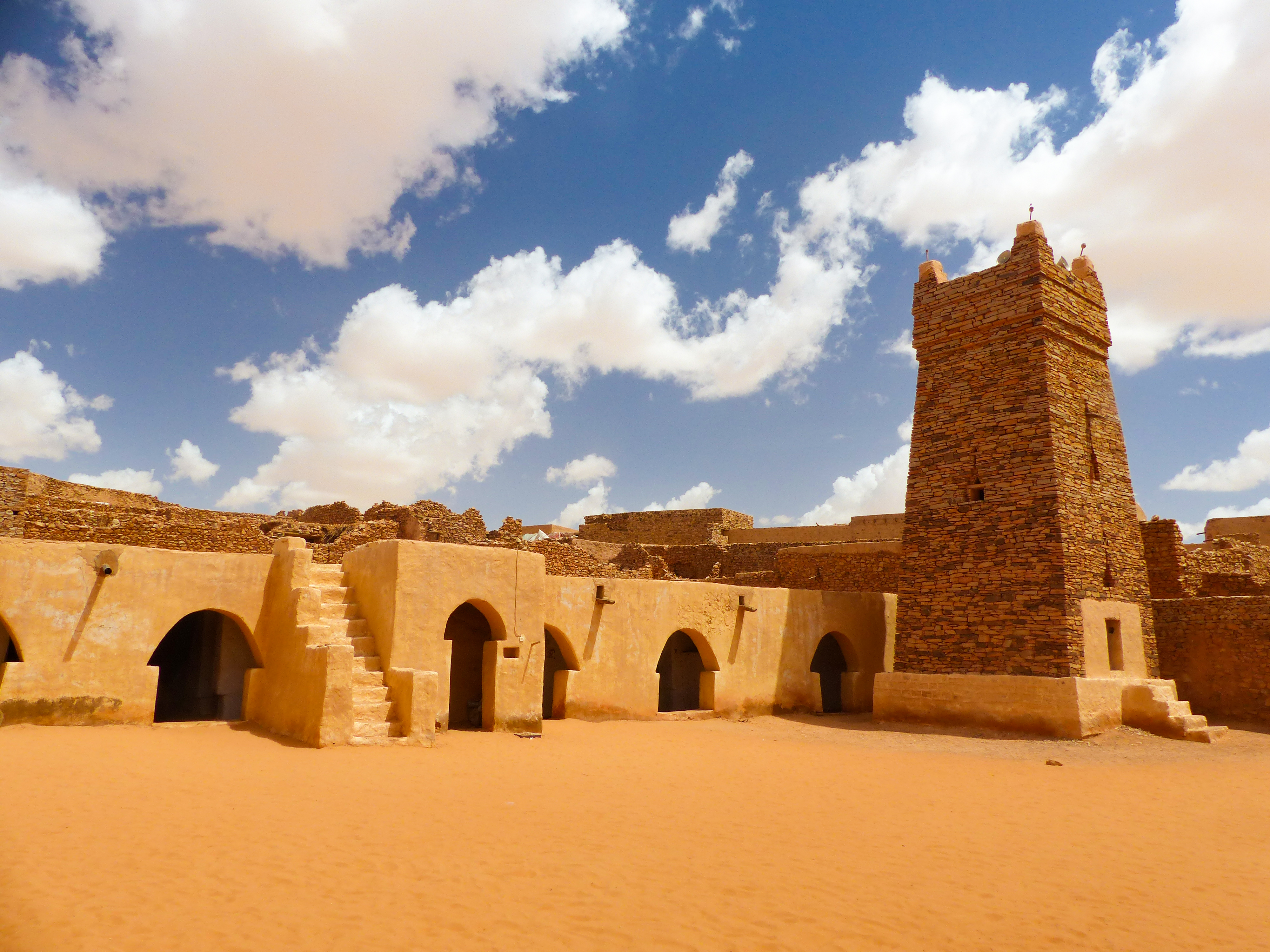
2–3 hoursThe ancient mosque sits at the heart of Oualata's old town, its mud-brick minaret rising above a labyrinth of ochre lanes. Walking the medina with a local guide is to step into a settlement that has changed remarkably little in its fundamental form since the medieval period — narrow alleys, carved wooden doors, and the silence of deep desert heat.
Walking tourOne of the most selective institutions of Islamic learning in West Africa, Oualata's Koranic school accepts only twenty new international students each year. Its reputation for rigour and depth draws applicants from across the continent. The school's presence is a reminder that Oualata is not a relic — it remains a living centre of faith and intellectual life.
Living heritageThe ancient cemetery on the outskirts of the settlement holds the graves of scholars, merchants, and rulers stretching back many centuries. The stone markers, engraved in Arabic, stand in long rows against the desert landscape — a quiet, profound place that anchors the city's depth in ways the finest building cannot.
Late afternoonOualata sits on a hillside above the Aoukar Depression in the far southeast of Mauritania — about as deep into the Sahara as you can travel and still find a city. The surrounding landscape of dunes, rocky outcrops, and vast silence is best explored on camelback or by 4x4, with a Yolo-arranged guide who knows every track and water point.
Half or full dayA Living Art Form
In Oualata, the decoration of homes is entirely the domain of women. Using fingers, feathers, and simple tools, they apply ochre, white, and dark pigments to interior walls in intricate repeating patterns — geometric grids, interlocking curves, stylised flowers — each pattern carrying meaning that outsiders can rarely decode at a glance.
These are not paintings made for tourism. They predate the concept. The tradition is believed to have existed for as long as the city itself, functioning as protection, identity, and pride — the most personal possible form of architecture. To be invited inside one of these homes is one of the most extraordinary privileges available to a traveller in West Africa.
"Oualata is not a destination you visit. It is a place you are received into — if you come quietly enough."— Yolo Travel, Field Notes
Before You Go
The nearest airport is in Néma, with flights from Nouakchott — though these do not run daily. The overland journey by 4x4 from the Adrar region is long and demanding but spectacular. Yolo arranges both, including all logistics and permits.
Two nights is the sweet spot — enough time for the museum, medina walk, painted houses, cemetery, and an evening or morning in the surrounding landscape without rushing. The remoteness of Oualata means most visitors stay at least one night on-site.
Southeast Mauritania is significantly hotter and drier than the coast. The cooler season between October and March makes the overland journeys and outdoor exploration manageable. Summer temperatures in this region can be extreme.
The old town is entirely walkable — its lanes are too narrow for vehicles. A local guide arranged by Yolo is essential both for navigating the medina and for securing introductions to homes with painted interiors, which are privately owned and require invitation.
Oualata attracts a fraction of the visitors that reach better-known Mauritanian sites. Locals notice and welcome the rarity of foreign visitors — a dynamic that makes encounters here feel genuine rather than transactional. Come prepared to be curious, not just to look.
Loose, modest clothing suited to Islamic custom and desert sun. A good camera for the painted interiors (ask permission first). Patience — Oualata moves at its own pace. The slower you travel here, the more you receive.
Ready to Go?
From $490 per person. Includes expert local guide, manuscript museum entry, medina and painted house visits, desert excursion, and all transport and accommodation arrangements. One of the most extraordinary journeys Yolo offers.