Mauritania · West Africa · Capital City
Nouakchott
Where the Sahara exhales into the Atlantic — a capital born in a single generation, now alive with a million stories.
Scroll
Book Your Visit
We usually reply within a few hours. Your details are never shared.
Mauritania · West Africa · Capital City
Where the Sahara exhales into the Atlantic — a capital born in a single generation, now alive with a million stories.
The Capital
Nouakchott — whose name translates as "place of the winds" in the Berber tongue — was little more than a coastal outpost when Mauritania stepped into independence in 1960. Planners sketched a capital for thirty thousand souls. The city had other ideas.
Waves of migration driven by drought and regional upheaval through the 1970s and 80s swelled the population beyond all projections. Today the city holds over a million people — nearly a third of the entire country — compressed between the ochre dunes of the Sahara and the cold, fish-rich waters of the Atlantic. That collision is what makes Nouakchott unlike any other capital on earth.
It is messy, magnetic, and entirely itself. A city that didn't inherit history so much as sprint to create one.
What to See & Do
Mauritania's great fishing harbour stirs to life before dawn. Painted wooden pirogues return mid-afternoon piled with the morning's catch — grouper, octopus, rays — while craftsmen shape new hulls in the sand beside the water. Raw, vivid, completely unrehearsed.
Half-day visitOne of the largest livestock markets in the region, held on the city's outskirts each morning. Hundreds of dromedaries change hands alongside cattle and goats. Camels here are currency, sustenance, and social standing all at once — a glimpse into a commerce that predates the capital itself.
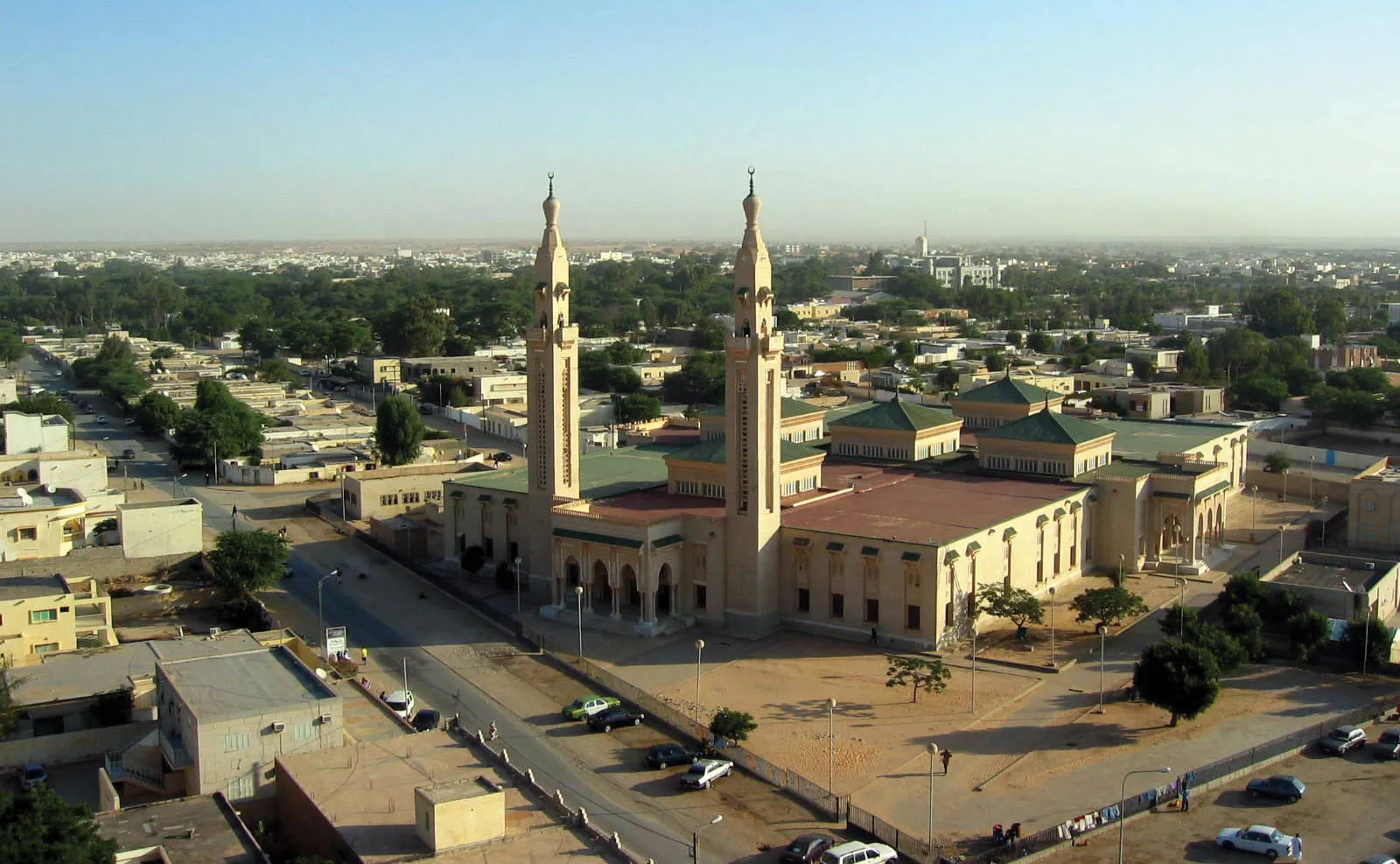
Early morningRising above the city centre, Nouakchott's grandest mosque is a commanding presence on the skyline. Its pale minarets and geometric stone facades reward a slow walk around the exterior — a meditation in form and silence amid the city's energy.
City CentreA modest building that punches well above its size. Artefacts excavated from Mauritania's ancient desert cities sit alongside Islamic manuscripts and ethnographic collections. A necessary prologue before heading into the interior.
2–3 hoursThe Marché Capitale pulses at the heart of the La Capitale district — fabrics, spices, gold, and the noise of ten thousand conversations. Nearby, the Centre d'Artisanat offers silverwork, leather, and the deep indigo textiles that Mauritanian craftspeople have been weaving for centuries.
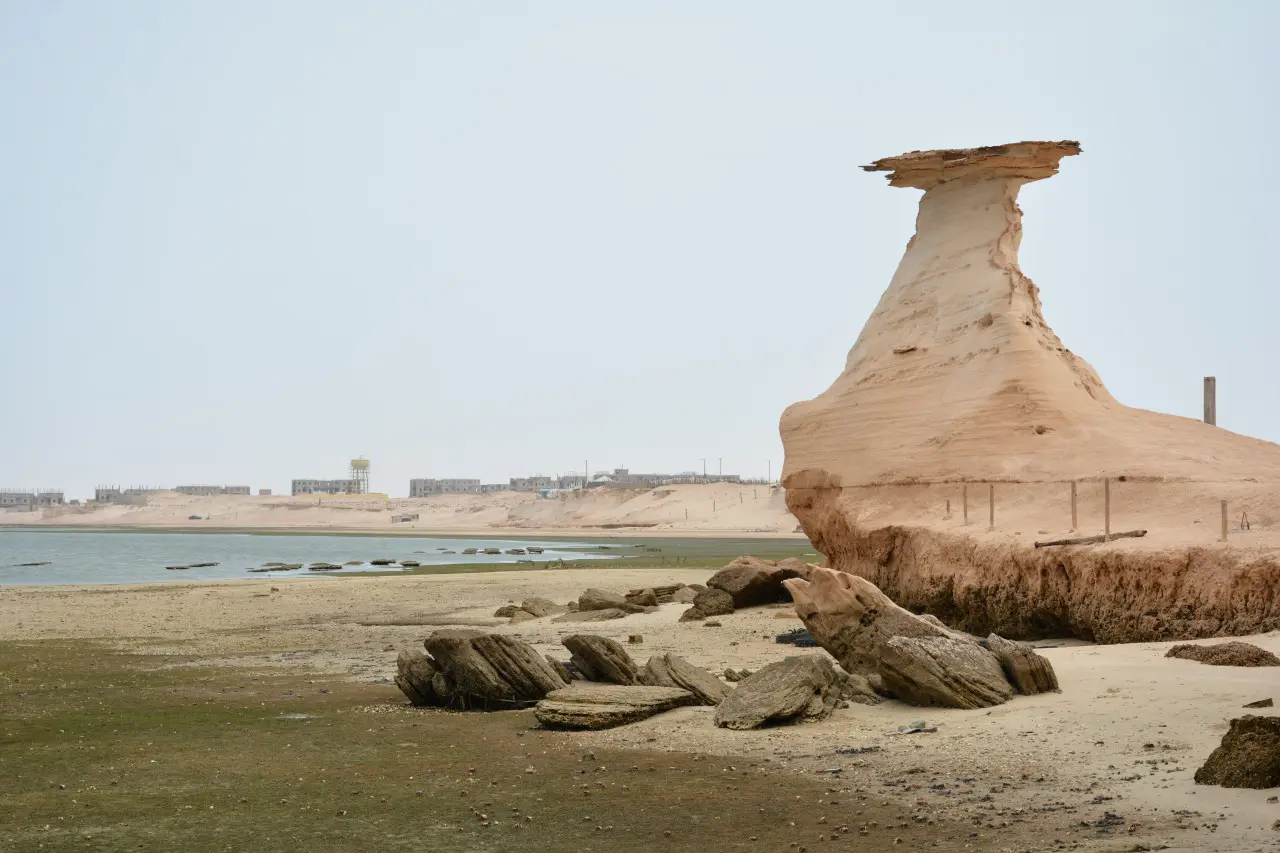
Half-dayWalk to the edge of the city and the Sahara simply ends — replaced by crashing Atlantic surf. Hire a horse or camel and ride along the shore at sunset, with the dunes at your back and the open ocean ahead. There are few moments in travel quite like it.
Sunset rideThe City's Fabric
Nouakchott is a city of distinct quarters, each with its own rhythm and character. The main junction of Carrefour BMD divides the two poles of city life.
The name translates as "the beautiful woman" — a fitting description for Nouakchott's most polished quarter. Tree-lined avenues, embassies, better restaurants, and the beach access that residents guard closely. Your most likely base as a visitor.
The commercial and administrative engine of the city. The Marché Capitale, government ministries, and Avenue du Général de Gaulle all fall within this dense, busy quarter. Where Nouakchott does its daily business.
The sprawling suburban kebbas that grew fastest during the drought migrations of the 1970s and 80s. Less polished, entirely authentic — here you hear the city's many languages and see Mauritanian daily life without filters.
Straddling the coast between Tevragh Zeina and the fishing harbour, Sebkha sits on the salt flats that give it its name. The Port de Pêche itself defines this edge of the city — brine, boats, and the daily miracle of the Atlantic catch.
Before You Go
Sits 30 km north of the city centre. We strongly recommend arranging your airport transfer in advance — let Yolo handle it and avoid the on-site taxi rush.
The Atlantic trade winds keep temperatures comparatively mild year-round, but the coolest and most comfortable months for exploring on foot fall between November and April. August to October bring the strongest heat.
A well-paced day covers the market, port, mosque, and museum. Two days lets you breathe, wander into neighbourhoods, and take the evening shore ride without rushing. Nouakchott also makes an ideal base for wider Mauritanian adventures.
Shared taxis are the city's lifeblood and remarkably affordable. Tevragh Zeina and the port district are walkable from each other. Your Yolo guide will know exactly where to go and when.
Hot, dry, and windswept — the Northern Trade Winds roll off the Atlantic and moderate what would otherwise be a punishing Saharan heat. Pack light layers for the evenings and good sun protection for daytime walks.
Cash remains king outside the larger hotels. Yolo's city experience packages cover guides, key entrances, and transport so you can focus on the experience, not the logistics.
Ready to Go?
From $280 per person. Includes expert local guide, port and market visits, transport, and airport coordination. Customisable for solo travellers and groups.