Mauritania · Cap Blanc Peninsula · Atlantic Coast
Nouadhibou
Iron ore and open ocean — Mauritania's industrial heartland, where the world's great iron ore train ends its journey at the edge of the sea.
Scroll
Book Your Visit
We usually reply within a few hours. Your details are never shared.
Mauritania · Cap Blanc Peninsula · Atlantic Coast
Iron ore and open ocean — Mauritania's industrial heartland, where the world's great iron ore train ends its journey at the edge of the sea.
The Economic Capital
Founded in 1905 as Port-Etienne — a French colonial foothold on the Cap Blanc peninsula designed to counter Spanish influence further north — Nouadhibou has grown into something its founders never imagined: the economic engine of an entire nation.
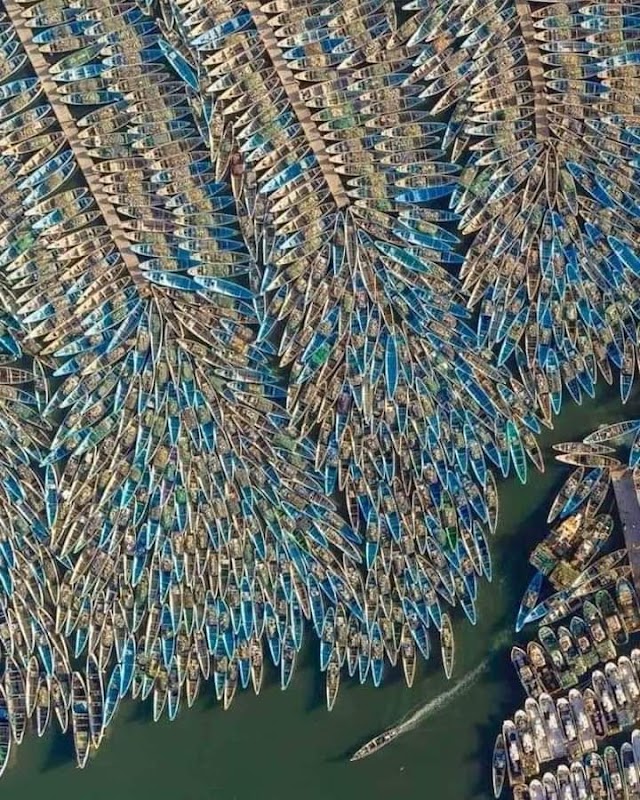
Today it is Mauritania's second-largest city and, by almost every commercial measure, its most consequential. The iron ore train rumbles in from the Saharan mines of Zouérat three times a day, depositing its cargo at the Port Minéralier before the ocean ships it to steel mills across the world. Around the bay, traditional wooden pirogues still set out at dawn, Senegalese, Malian, and Mauritanian crews working the same cold, fish-rich waters their predecessors have always known.
This is a city that works. Loud, purposeful, and unlike anywhere else in West Africa.
What to See & Do
More than a hundred rusting hulks lie half-submerged in the shallow waters of the bay — abandoned fishing trawlers, cargo vessels, and tankers that owners simply walked away from over decades. Equal parts haunting and spectacular, the ship graveyard is one of the most surreal landscapes in Africa and Nouadhibou's most talked-about sight.
UnmissableThe traditional fishing harbour is alive before the sun is fully up. Brightly painted pirogues jostle for space as crews unload the night's catch — barracuda, grouper, octopus, and more. Fishermen from across West Africa work these waters, making the port a babel of languages and one of the most photogenic spots on the Atlantic coast.
Early morningTwenty kilometres south of the city, the Cap Blanc headland shelters one of the world's last surviving Mediterranean monk seal colonies — a critically endangered species that has found refuge in these remote Atlantic caves. The drive down the peninsula passes stunning dune and shoreline scenery along the way.
Half-day tripNouadhibou is where the legendary iron ore train — one of the longest and heaviest trains on earth — completes its 700-kilometre crossing of the Sahara from the mines of Zouérat. Watching it arrive, carriages coated in red ore dust, is a spectacle you won't forget. For those brave enough, the journey itself is a Yolo signature experience.
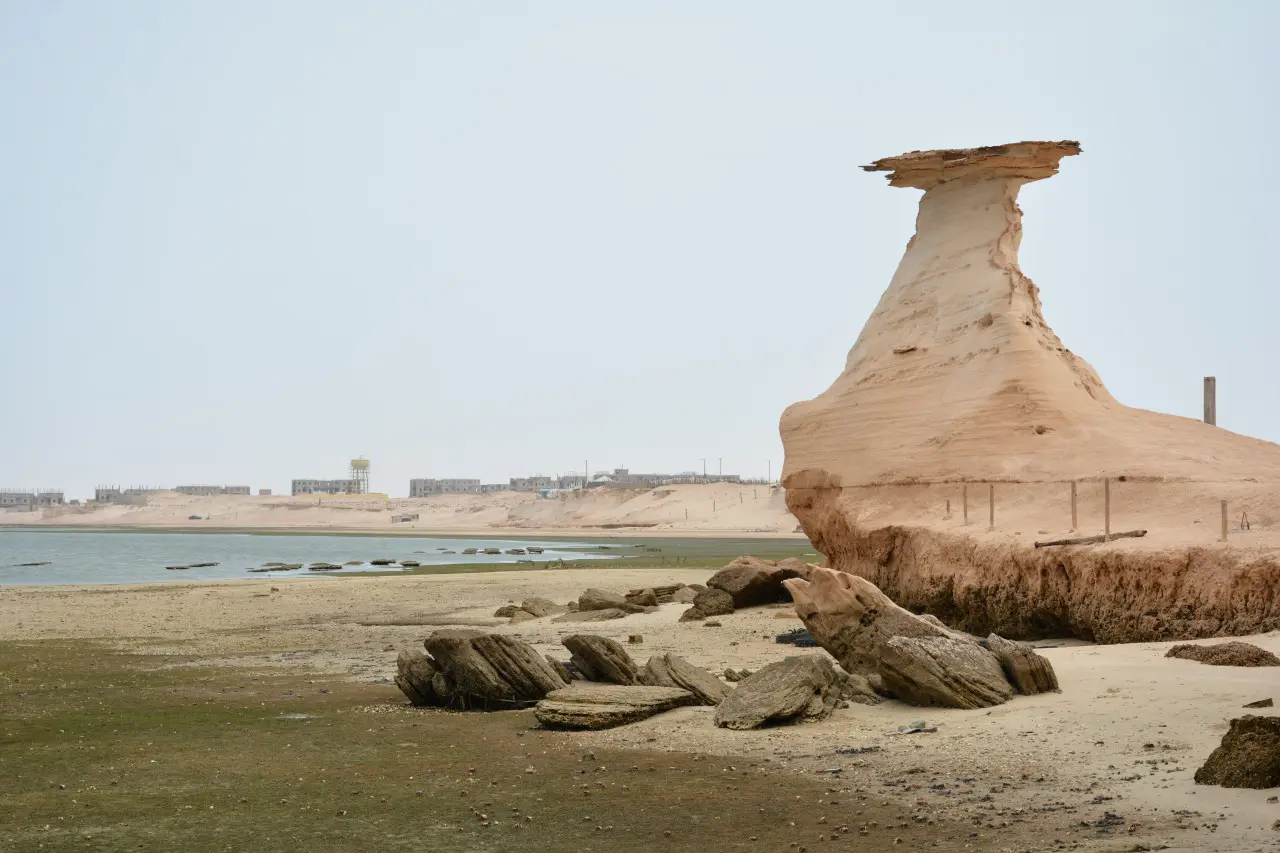
Iconic arrivalA distinctive flat-topped rock formation rising from a white sand beach on the outskirts of the city. Local families come here for the shade and the quiet; visitors come for the views. It is the kind of place that appears on no itinerary yet ends up being exactly what you needed — unhurried, silent, and genuinely beautiful.
Afternoon escapeThe peninsula's most accessible beach stretch, where the cold Atlantic rolls in across pale sand. Unlike the worked shoreline by the port, Kabanou feels genuinely open — a place to walk, sit, and let the wind do the thinking. The water is bracing but swimmable. Sunset here, with the dunes at your back, is a natural full stop to the day.
Sunset walksThe City's Pulse
Understanding what drives Nouadhibou makes the city legible in a way few port cities are. Two industries define its rhythm — and both are fully visible to the curious visitor.
The waters off Cap Blanc are among the most productive fishing grounds on the planet, shaped by the cold Canary Current upwelling. The Port Artisanal handles artisanal landings from hundreds of pirogues; the Port Autonome handles industrial fleets — many Chinese-operated — that work the deeper offshore grounds. Fish, octopus, and crustacean exports leave Nouadhibou bound for Europe and Asia daily.
The Port Minéralier receives iron ore arriving by train from the Zouérat mines in the far north of the Sahara — up to three train runs a day, each convoy stretching up to three kilometres in length. From the port, the ore is loaded onto bulk carriers heading to steel mills worldwide. Alongside iron ore, Nouadhibou handles exports of gold, copper, petroleum, gypsum, salt, and steel.
Before You Go
A well-maintained highway connects Nouadhibou to Nouakchott (approx. 900 km), passing near Banc d'Arguin National Park. The iron ore train from Zouérat offers one of the world's great rail adventures — let Yolo arrange both.
A single overnight is enough to cover the ship graveyard, fishing port, Cap Blanc, and a beach sunset without rushing. Nouadhibou is punchy rather than sprawling — it rewards focus over length of stay.
The Canary Current keeps Nouadhibou notably cooler than the rest of Mauritania — even in summer it rarely becomes oppressive. For the clearest skies and most comfortable conditions, aim for the cooler months between October and March.
The city is navigable by shared taxi, but to reach Cap Blanc and the ship graveyard at the right times — early morning for the port, golden hour for the wrecks — a private vehicle arranged by Yolo makes all the difference.
Cooler and windier than almost anywhere else in Mauritania, thanks to the Canary Current offshore. Bring a light layer for evenings even in summer. Sea mist in the early morning softens the light beautifully for photography.
Nouadhibou sits at Mauritania's northern frontier. Travellers entering from Morocco or Western Sahara by road arrive here first, making it both a gateway city and a worthy destination in its own right before heading south.
Ready to Go?
From $320 per person. Includes expert local guide, ship graveyard and port visits, Cap Blanc excursion, transport, and accommodation coordination. Combine with the Iron Ore Train for the full experience.