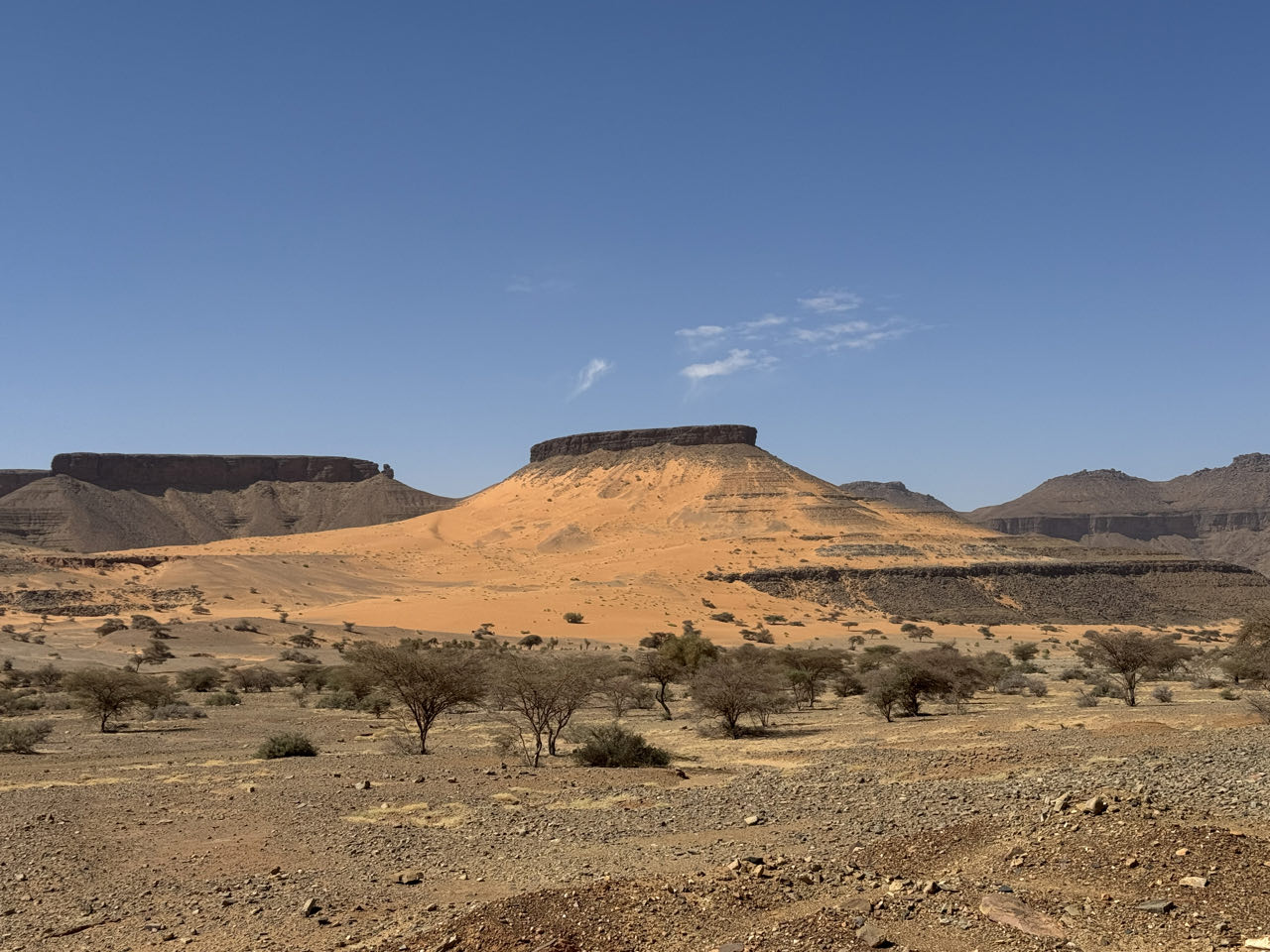
Mauritania · Capital of the Adrar Region
Atar
The living capital of the Adrar — where ancient fossilised reefs meet the Grand Canyon views of the Amogjar Pass, and every desert road leads somewhere extraordinary.
Scroll
Book Your Visit
We usually reply within a few hours. Your details are never shared.
Mauritania · Capital of the Adrar Region
The living capital of the Adrar — where ancient fossilised reefs meet the Grand Canyon views of the Amogjar Pass, and every desert road leads somewhere extraordinary.
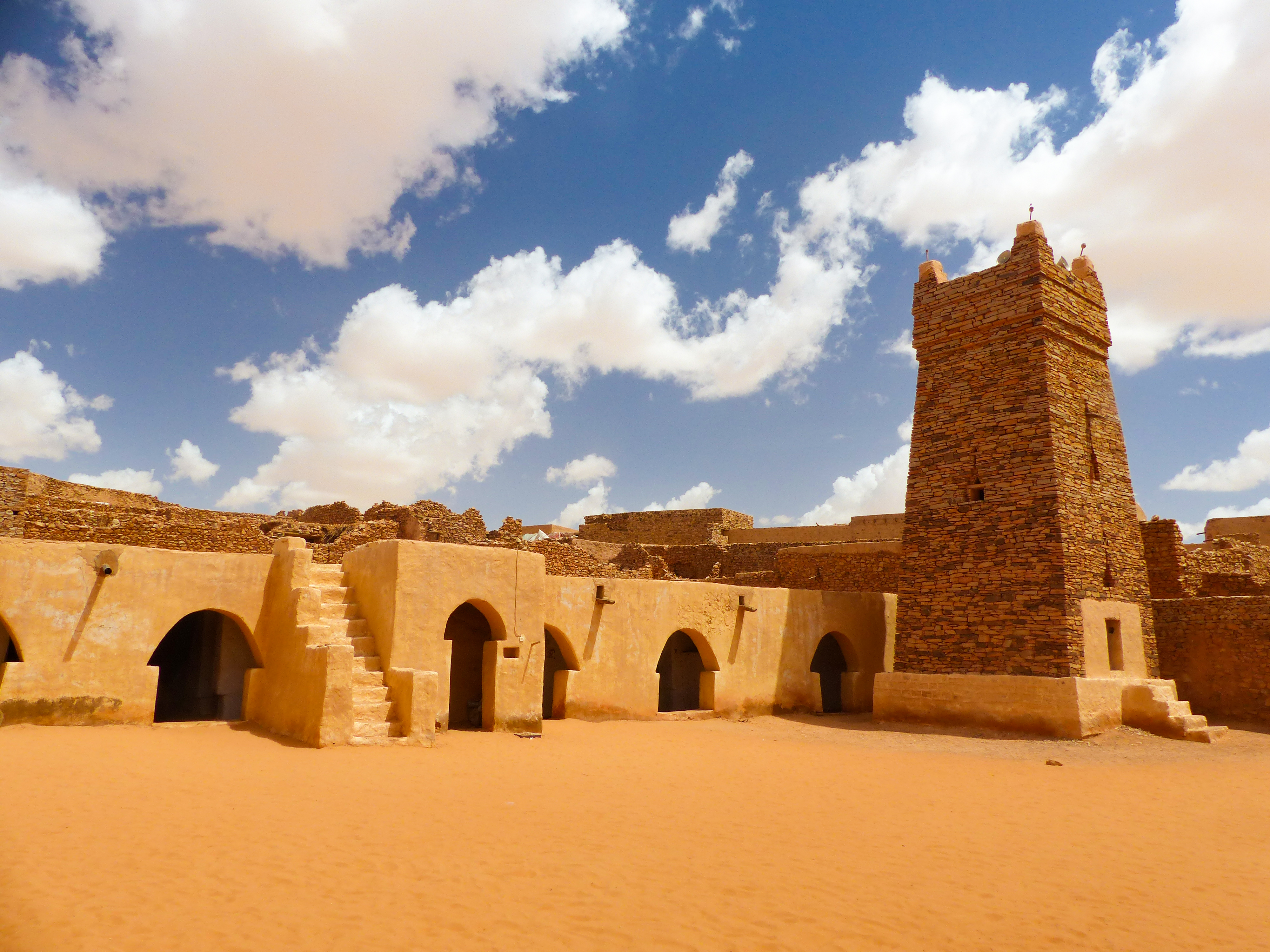
Gateway to the Adrar
Atar was not always the most culturally prominent city in the Adrar — that distinction belonged to its ancient neighbours Chinguetti and Ouadane. But when the French chose it as their regional administrative capital in the early 20th century, the balance shifted permanently. At Mauritanian independence, Atar was the most populous and economically significant city in the entire country — a position it has never entirely surrendered.
Today Atar is the Adrar's living commercial and logistical centre: the city with the airport, the market, the fuel, the guides, and the routes that lead to everything extraordinary in the surrounding landscape. Its own streets are worth a day's unhurried exploration — the local market requires bargaining instincts, the women's handicraft centre rewards patience, and the old quarter of Azougui preserves traces of a settlement that predates the French by centuries.
But Atar's greatest asset is its position. Within two hours in any direction lie Chinguetti's ancient libraries, Terjit's desert springs, Ouadane's clifftop ksar, the Amogjar Pass, and the Richat Structure. This is the city you base yourself in — and the city you will return to after each extraordinary day in the field.
What to See & Do
The road from Atar climbs through the Amogjar Pass — a canyon route through the Adrar Plateau that delivers views comparable to the American southwest, but entirely without crowds. The rock faces change colour through the day from red-gold at dawn to deep ochre at dusk. Driving through in early morning or late afternoon is one of the most beautiful experiences in Mauritanian travel.
Dawn or duskAn hour from Atar by 4x4, Terjit is a natural spring oasis hidden in a canyon gorge — a shock of palms, clear pools, and cool air in the middle of the desert plateau. Swimming in Terjit's spring water, surrounded by sheer rock walls, is an experience that travellers consistently describe as the single most vivid moment of their Mauritanian journey. Yolo arranges private access and a picnic lunch.
Half-day excursionOn the outskirts of Atar, the historic site of Azougui preserves the ruins of a settlement that preceded the French administrative city by many centuries. The site includes ancient adobe structures, cemetery remains, and the traces of a community that flourished along the pre-colonial caravan routes. A visit here adds depth to any understanding of what the Adrar looked like before the 20th century arrived.
Half-dayAtar's market is the commercial engine of the Adrar — where dates from the surrounding oases, locally-woven textiles, metalwork, leather goods, and provisions for desert travel change hands. Navigating it requires some negotiation confidence, but the exchanges are generally good-natured and the prices, for those willing to engage, are fair. Allow a morning and bring small denominations.
Bring cashAtar's women's handicraft centre is a significant institution — a cooperative that supports local artisans producing woven goods, jewellery, and traditional crafts for sale to visitors. The quality here is consistently higher than the market, the prices are fixed and transparent, and purchases made here contribute directly to the livelihoods of the women who made them. An ideal place to find something genuinely worth taking home.
Fixed pricesAtar is built on what was once the floor of an ancient sea — and the fossilised reef systems visible in the rock beneath and around the city are a geological record of a time when this desert was ocean. Several accessible outcrops near the town reveal preserved coral structures of extraordinary detail, a reminder that the Sahara's dryness is a relatively recent development in the long story of this landscape.
Geological wonderEvery July & August
Each year in July and August, when the date palms of the Adrar oases come heavy with fruit, thousands of people gather in the region for the Guetna — a harvest festival that is one of the most joyful and authentic celebrations in Mauritanian life. The word guetna describes both the harvest itself and the festive season surrounding it: a period of music, shared meals, and the collective pleasure of abundance after a long, hot summer.
For visitors, the Guetna offers something rare: the chance to participate in a living cultural tradition rather than observe it from a distance. The oases around Atar — including those near Chinguetti and Ouadane — fill with activity during harvest week. Families who have moved to Nouakchott or Nouadhibou return. Music plays through the evenings. The dates are fresh, sweet, and unlike anything sold in any market outside of harvest season.
"Come during Guetna and you will see Mauritania as Mauritanians experience it — not as a destination, but as a home worth celebrating."— Yolo Travel, Field Notes
Before You Go
Atar has a regional airport with daily flights from Nouakchott and direct connections from Paris in high season. Flight time from Nouakchott is approximately one hour. Overland from Nouakchott is possible but takes a full day. The airport is Atar's major logistical advantage over all other Adrar cities.
Atar itself warrants a day or two — the market, Azougui, the Amogjar Pass, Terjit. But its real value is as a base for exploring the wider Adrar: two to five nights allows a proper circuit including Chinguetti and Ouadane, with day trips to Terjit and the Richat Structure. Yolo designs Adrar itineraries around Atar as hub.
The dry, cool season from October to April is ideal for outdoor exploration and desert travel. July and August is Guetna season — hotter and busier, but culturally extraordinary. The shoulder months of May and September are possible but Saharan heat is significant. Yolo advises on the best timing for each type of trip.
Atar's urban centre is walkable, but all excursions — Terjit, Chinguetti, Ouadane, Richat, Amogjar Pass — require a reliable 4x4 with an experienced driver who knows the piste conditions. Yolo provides vehicles, drivers, and guides for all Adrar excursions, with flexibility to adapt to road conditions and weather.
Atar has the widest range of accommodation in the Adrar, from simple guesthouses to established hotels and tented desert camps in the surrounding landscape. Yolo selects accommodation matched to the style of your trip — comfortable and characterful for cultural travellers, more basic and immersive for those on a desert circuit.
Chinguetti is 86km east (2 hrs). Ouadane is around 3 hours. Terjit Oasis is 1 hour. The Richat Structure is reached via Ouadane. Zouérat and the Iron Ore Train are a long day north. Every major Adrar experience radiates from Atar — which is precisely why Yolo builds most Adrar itineraries around it.
Ready to Go?
From $380 per person. Includes Atar city day, Amogjar Pass drive, Terjit Oasis visit, Azougui historical site, market tour, and all local transport, guide, and accommodation arrangements.